
From Mountains to Jungle
Excerpt #2 from Life is Short but Wide

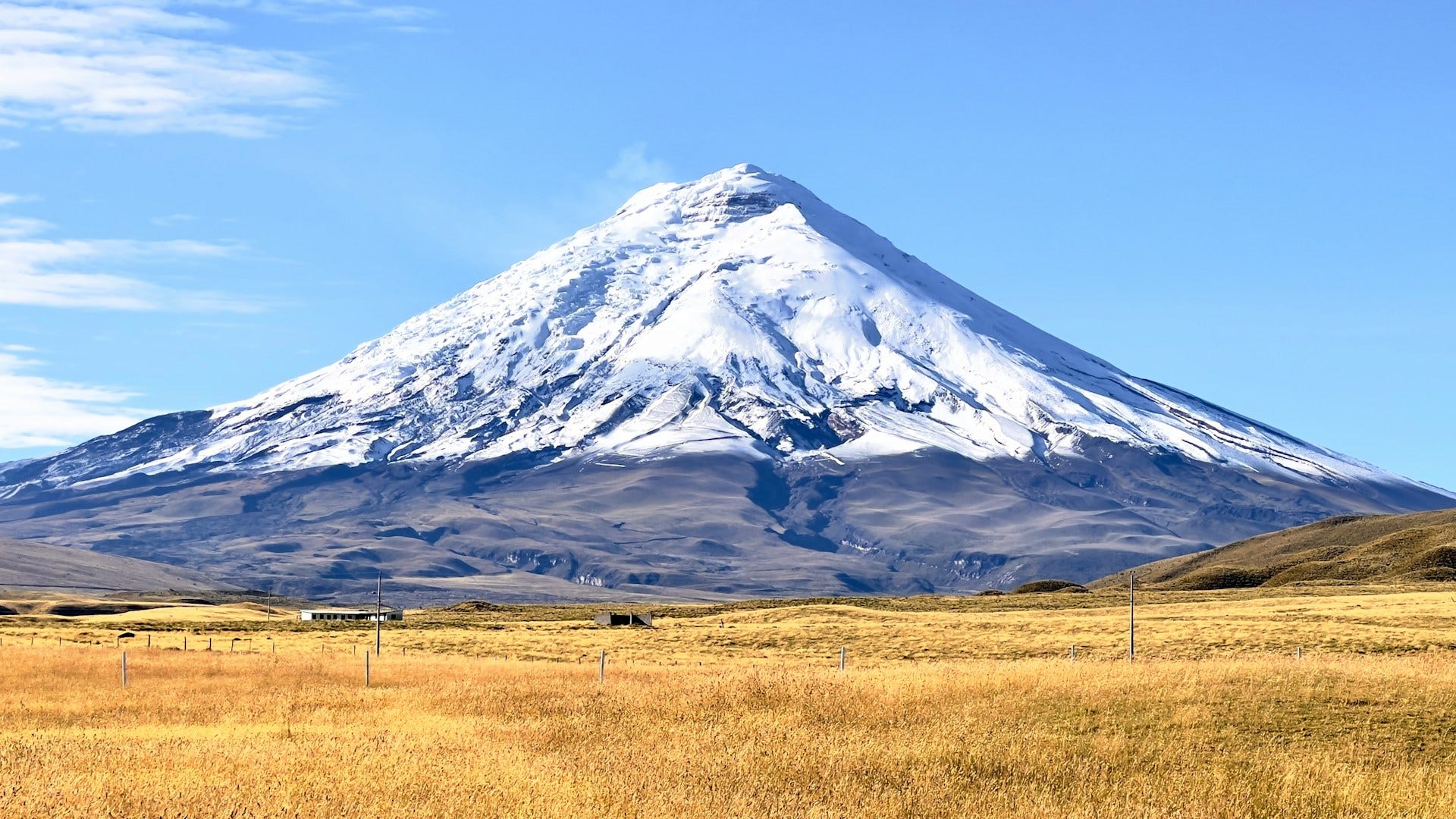
Cotopaxi Mountain - Photo by Nick Cruz on Unsplash
(Our first month was spent in orientation in Quito. Guided by the mission director and his wife, we travelled to various places in the Andes Mountains, including a visit to the high mountain community of Colta, tourist spots like Otavalo and San Antonio.)
We itched to get settled. It almost felt like there was a plot to keep us from seeing where we would live. When a couple who lived at the camp, Arlowe and Emma, arrived at the guest house, we asked if we could travel back with them. They had come to Quito to deal with paperwork for their infant son. They agreed, and we told the mission leaders that we were going. We thought it was time to take things into our own hands. We contacted our friends the Chapples via radio, and they assured us that we could stay with them. Hooray! We were so excited to finally see our new living situation.
Our route took us through Quito’s narrow streets and down into a valley before climbing up to 12,000 feet above sea level. The landscape was unfamiliar and strange. Huge moving bushes turned out to be small women with bundles of sticks tied to their backs, bundles so large they obliterated every inch of the women from the back. Beautiful, dry-looking wild country was covered in scrub brush and golden grasses. Then the magnificent snow-covered peak of Cotopaxi shimmered in the fading light as we crossed the high mountain pass and began our descent into the jungle. My ears popped constantly as we wound our way steeply downwards in serpentine lanes along the mountain edges. We passed through the town of Baños, and the road narrowed to one lane.
A one-lane tunnel formed the gateway to the infamous Shell Road, so named because of the oil company that explored the area in the 1940s and created an airstrip and construction camp on the edge of the Amazon jungle. Darkness had fallen and I was spared the sight of the roadside that drops sharply some 100 feet to the river below. The one-lane mud and gravel road snaked through the canyon, clinging to the mountainside. When we met an oncoming car, someone had to back up to a wider spot on the road to pass. At one sharp curve a waterfall poured over the road, and we drove beneath the spray of water. Lanterns and candles flickered in the small hamlets of Rio Verde and Rio Negro. Many people were out of doors chatting with neighbours. “The electric power is out,” said Arlowe. It all looked foreign and ghostly to me, a shadowy world for which I had no comparison or context. Everything was so very strange. I felt like I was in a National Geographic movie.
It was ink-dark when we arrived at the camp. The soft glow of a lantern welcomed us as the generator had been turned off for the night. Don and Phyllis had prepared a bed for us in the ground floor basement of their rustic wooden home. An old-fashioned quilt on the bed and a rug on the cement floor helped make it cozy-looking. Our own bathroom was next door. Still, I was terrified. I was fearful of all the creepy crawly things that might lurk in the corners. Tim held me close and reassured me. We used candles and flashlights to find our way around. I wondered if I would sleep at all. The air was full of a new scent that I came to recognize as rich jungle humus decaying in the heat and humidity that pervaded everything. I lay in bed listening to the jungle noises, the hum and croaking of a million tiny creatures. The steady song lulled me to sleep, and I awoke refreshed.
Everything looked better in the morning. We were eager to explore the camp where we would work and live for the next three years. I danced with impatience to see our new home. The four houses at the camp were occupied by our co-workers’ families, and we would live a mile away, in the small village of Mera. Arlowe took us to see the house. A very rusty tin roof, a low cement block building, and scraggly bushes did not make an attractive sight. Arlowe opened the front door, and we stepped into a dank and musty living room. Two windows provided welcome light. The floor was uneven concrete, painted red, with a stamped design. A mouldering green carpet lay wet and crumpled in the middle of the floor. Rain had entered from the crack under the front door and pooled there. A sink and thick concrete countertop comprised the kitchen. There were no cabinets or shelves. Located in the centre of the house, the kitchen had no natural light. My heart sank. The flooring changed from concrete to wooden slats in the hall to the bedrooms. Large spaces allowed access to any critters under the house. Three bedrooms with large windows looked bright and airy. There was a bathroom with a toilet and sink. No tub. By this point I was in complete denial. Surely no one could expect us to live in such a place. I was naïve. This had been a home for short term workers for several years. I couldn’t bear thinking about bringing a newborn baby into this place.
Arlowe made suggestions. Move the kitchen to the dining room and open the walls to form an L-shaped living area. The kitchen would then have light from a large window. Tear up the wooden floors and pour a new cement floor throughout. All of this made perfect sense to us. During the five days we stayed at the camp on this first visit, Tim began pulling up floorboards and calculating materials needed. It seemed unlikely that the work would be finished before the baby’s due date in mid-November. Chapples kindly said we could live in their basement room until the house is done. We were filled with excitement at having a plan!
However. Not so fast. Tim and I were unfamiliar with how the mission structure worked. Each region of the country had a director who oversaw staff. The directors met regularly in Quito to conduct the business of the mission in a Field Council. When we returned to Quito, full of excitement about making the Mera house livable, we were soon brought down to reality. Field Council needed to approve this kind of expenditure. No work had been done due to a problem with getting the house legally registered in the mission’s name. We were in trouble already. As young whippersnappers, we had little appreciation for “the way things were done.” Our impatience did not impress anyone. However, in the end, our plans were approved. Tim spent his remaining days in Quito doing repairs in the guesthouse, building cabinets in the office building, and pricing materials for our home. He was sometimes frustrated as the stores didn’t open until 9 or 10 and closed between 12:30 and 3:30 for a siesta break.
The issues with shipping our vehicle were not over. Once our truck (and Chapple’s) was shipped, the laws changed again. Now canopies were disallowed. We suggested that it be removed and thrown away. No. Impossible. We waited. And waited. The seven-dollar US per day charge kept going up and up. It was a full seven months later, in February, before the two trucks were released. With the canopies. Until then, we were reliant on others for transport.
Once again, we traveled down to Mera, with our co-workers. This time, I looked forward to being there for a long while, settling into a welcome routine, and in a few months, giving birth to our little one. I longed to make my home a place of warmth and rest for my husband and baby. Now it could begin.
Your writing is so poetic and beautiful, then you throw in fun words like whippersnappers and, elsewhere, flibbertigibbet. It's like the twists and turns of an Ecuadorian mountain road.
Great account. And we complain in Canada when a pothole is not fixed in a few months
!