
The Table We Gather Around

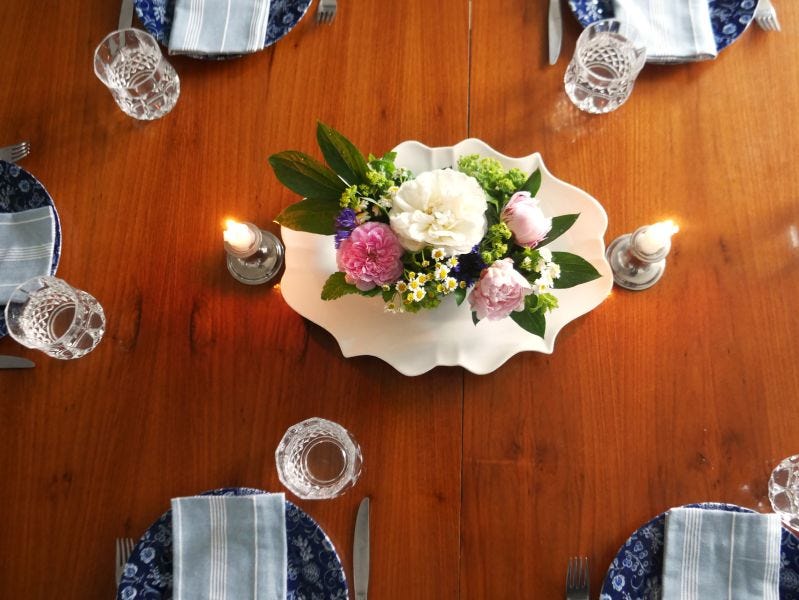
The table seats six comfortably, eight at a pinch if two people who like each other share the ends. If pulled apart from the centre, and three leaves inserted, 14 people can easily fit, and up to 18 people have crowded around it, sharing food and conversation. Christmas dinners, birthday parties, Tuesday suppers, regular meals – I would imagine that several hundred people have gathered around this table over its 40 years.
The wood is Ecuador Laurel (cordio alliodora), also known as Spanish Elm or Salmwood. Tim didn’t know these alternate names when he chose the wood. He chose it because it was available, economical, and we liked the colour. Much of the furniture one could purchase in the small jungle town of Puyo was made of Laurel. It is termite-resistant, an important factor where lived for the joke was that older wood buildings still stood only because of the termites holding hands.
The camp where we lived and worked during our first years in Ecuador had a large maintenance shop that included a metal lathe, but no wood lathe. To turn the pedestals, Tim created a turning chisel out of a file and cobbled together a tool rest. We looked at samples of other tables in magazines and created our own design. No sliders were available in stores, so he made some from wood, and later waxed them so they would slide well. Into the extra leaves he inserted small dowels with corresponding holes. He created a tray underneath the table to hold two extra leaves. The third one is stored in the hall closet.
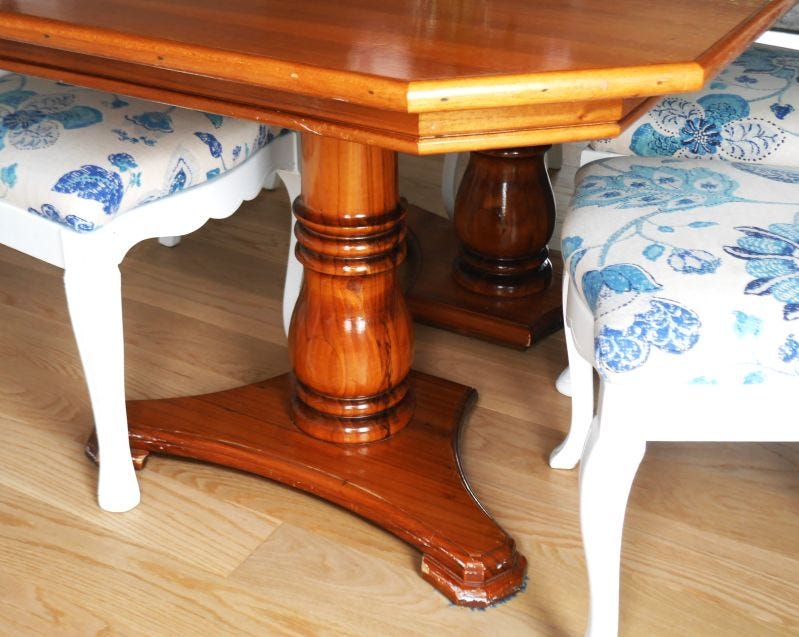
Tim finished the table with a durable two-part epoxy. He doesn’t remember what it was called and has never seen anything like it in Canada. It doesn’t water mark and warm dishes can be set directly onto the wood although we always protect it from oven-hot dishes. The table has not been refinished, and the bases bear the scars of chairs and shoes. The top has few marks, surprising considering the crafts and sewing that have happened there in addition to the hundreds, maybe thousands of meals eaten at it.
The table is witness to laughter and tears, anger and sorrow, to relaxed and not-so-relaxed conversations. Exposure to various cultural traditions happened around the table. Our children recall conversations that left them wide-eyed when we hosted our medical colleagues. Sometimes guests were unexpected, like a European family who needed a last-minute meal. Soup and sandwiches were served, and our family watched with admiration and a bit of puzzlement when the sandwiches were eaten with knife and fork. We had always served food family-style, but when we hosted Ecuadorian friends, I learned to dish out the food onto plates after one man told me, when confronted with a serving dish, that his wife was the one who dished the plates and he had never served himself.
When we lived in the more temperate climate of Quito, I tried to grow imported raspberries. It was not successful, but one day there were five deep red raspberries on the canes. I carefully picked them and hid them from the family until suppertime. Out came five bone china plates, each with one plump red raspberry dusted with a little icing sugar. How beautiful they looked. A bit of whimsy that made us all laugh.
The table moved with us from the jungle to the city of Quito, back to the jungle, and once again to Quito before we shipped it to Canada in a sea container. Our family of five has grown to 13, and we pull out the leaves to expand the table for all of us.
One of the typical Ecuadorian dishes we learned to enjoy is Locro de Papas, Potato Soup. With the addition of avocado and egg it is a hearty soup, a meal in itself when served with bread. Pancitos, or little breads, aka buns or rolls, were the norm, not loaves. I’m sharing the recipe below.
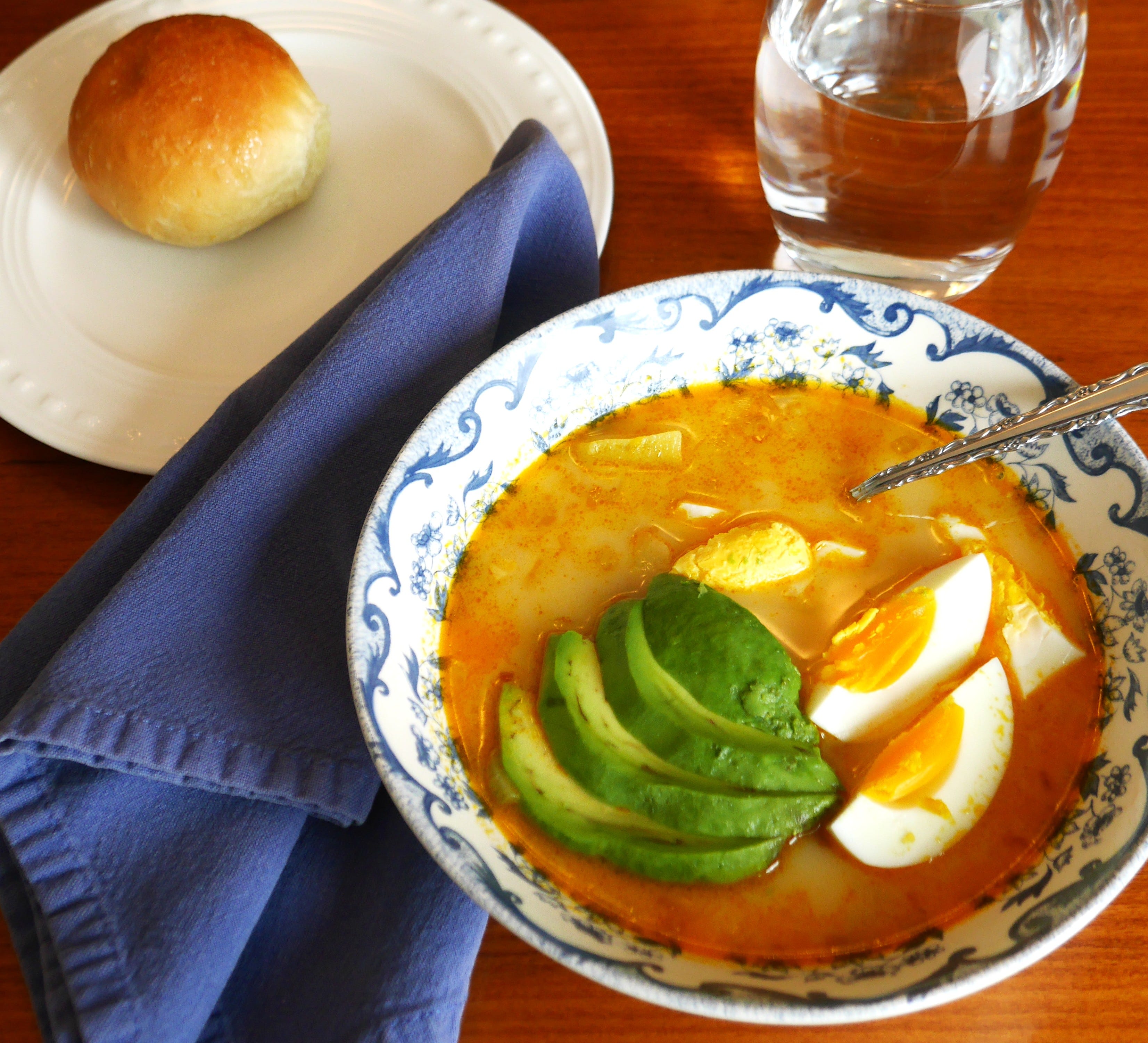
Andean Potato Soup (Locro de Papas)
6 medium yellow potatoes, peeled and cubed (about ¾ inch, or 2 centimetres)
4-5 cups water or chicken broth
1 cup milk
1 cup grated cheese (fresh cheese, or mozzarella)
2 Tablespoons butter
1 onion, finely chopped
2 garlic cloves, minced
1 Tablespoon ground cumin
1 Tablespoon ground achiote, also known as annatto (this adds colour to the soup, and is optional)
3 Tablespoons finely chopped cilantro
Salt to taste
Fresh avocado slices, hardboiled egg slices
Melt the butter and add the garlic and onion. Saute until slightly softened. Add the cumin and achiote (if using). Stir well for 2-3 minutes to develop the flavour. Add the potatoes and the broth or water. Bring to a boil, then simmer, covered, for 20 minutes or until the potatoes are very soft.
Use a fork to break apart some of the potatoes. There should be chunks remaining. Add the milk and heat through, but do not boil. Add the cheese, stir to melt.
Serve in bowls with slices of fresh avocado and hardboiled eggs. Top with cilantro, if desired. Tim hates the stuff, so I leave it out.
I must try that soup!
I love the idea of writing from the perspective of the table! What about writing from the perspective of an armchair, a car or pair of shoes?